Newsletter Subscribe
Enter your email address below and subscribe to our newsletter
Enter your email address below and subscribe to our newsletter

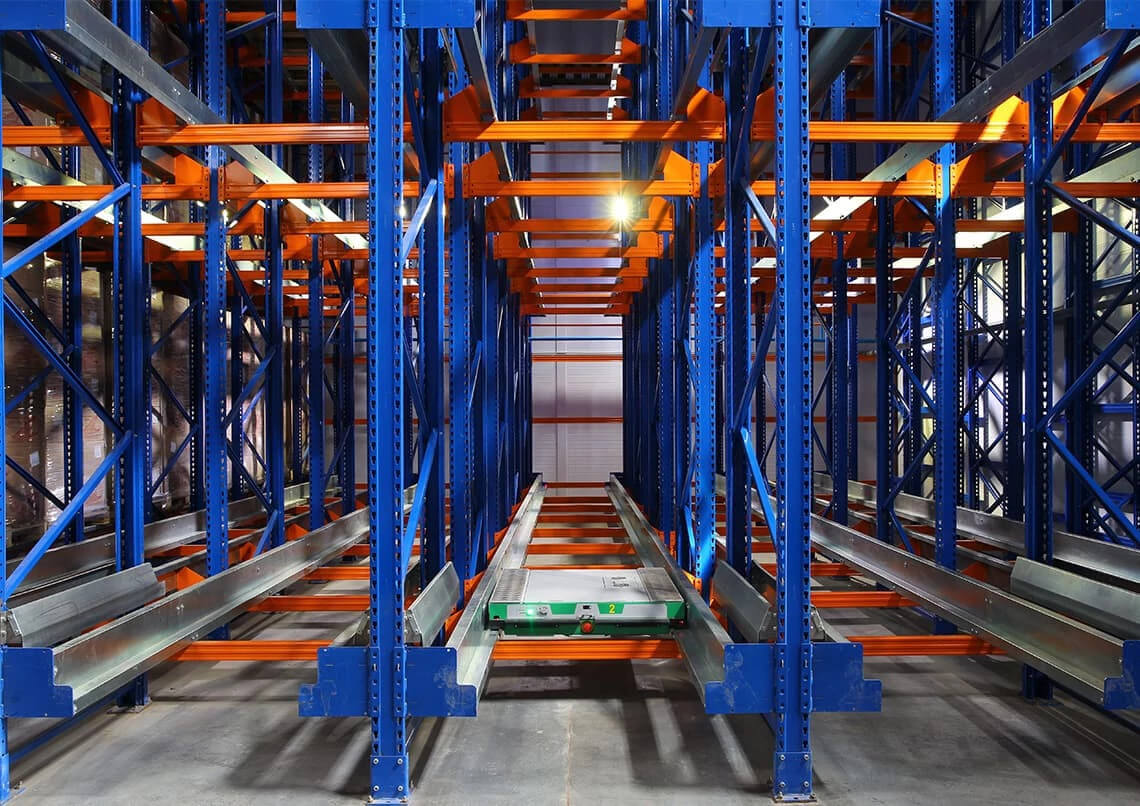
An Automated Storage and Retrieval System (ASRS) uses technology to move, store, and retrieve items in a warehouse or manufacturing facility. ASRS streamlines inventory handling by automating material flow, reducing manual labor, and increasing efficiency. These systems often include robotic cranes, shuttles, or mini-loaders to handle and store items in racks or bins.
Businesses implement ASRS to save space, reduce errors, and speed up order fulfillment. ASRS solutions can vary in complexity, from simple storage units with vertical lifts to fully integrated systems working within a larger automation setup. The system aims to improve productivity and accuracy in high-demand environments.
Automated Storage and Retrieval Systems (AS/RS) come in several types, each suited for different storage needs and operational demands:
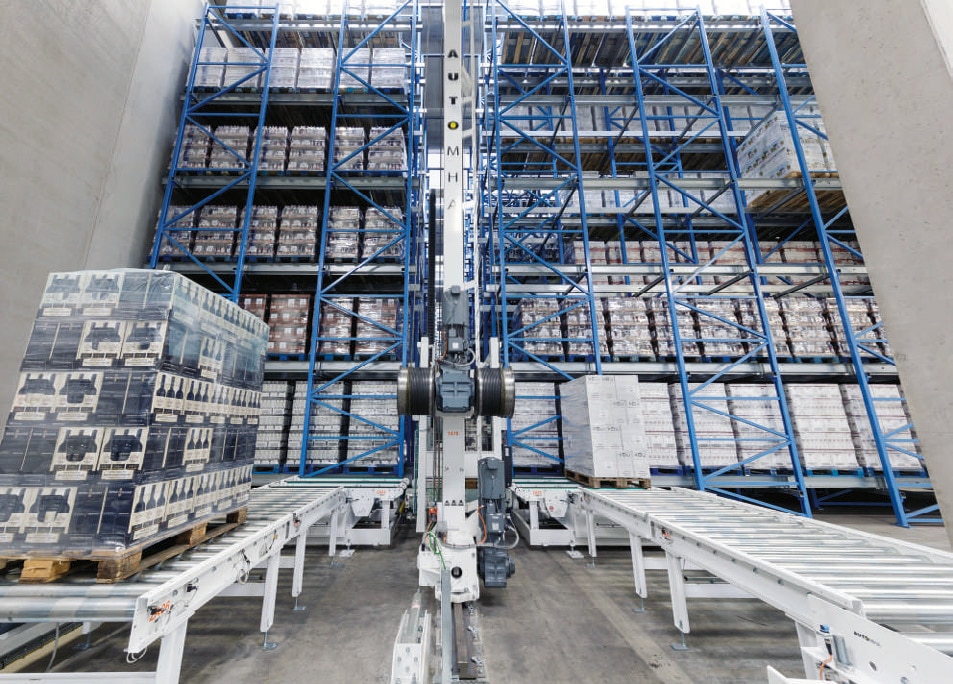
A Unit Load AS/RS (Automated Storage and Retrieval System) is a type of warehouse automation technology designed to automatically store and retrieve individual items or “unit loads” from storage locations.
A unit load typically refers to a single standardized container, pallet, or tote that holds multiple items. The AS/RS system uses automated machinery—usually a combination of racks, conveyors, and robotic devices—to manage these loads.
The key components include tall vertical storage racks organized in aisles, automated retrieval vehicles (often called S/R machines or shuttles) that move vertically and horizontally along the racks, and a control system that directs the movements.
The main advantages are efficiency and space utilization. Because the system can stack loads much higher than humans could safely reach, it maximizes warehouse space. It also operates continuously without fatigue, retrieves items quickly and accurately, and reduces labor costs since human workers don’t need to physically locate and retrieve items from high shelves. The system is particularly useful for high-volume operations where there’s repetitive, predictable storage and retrieval activity.
Unit Load AS/RS systems are commonly used in distribution centers, manufacturing facilities, and large retailers that handle standardized products and need fast, reliable inventory management. They’re different from other AS/RS types like mini-load systems (which handle smaller items like cases or cartons) or shuttle-based systems, though the distinctions sometimes overlap in practice.
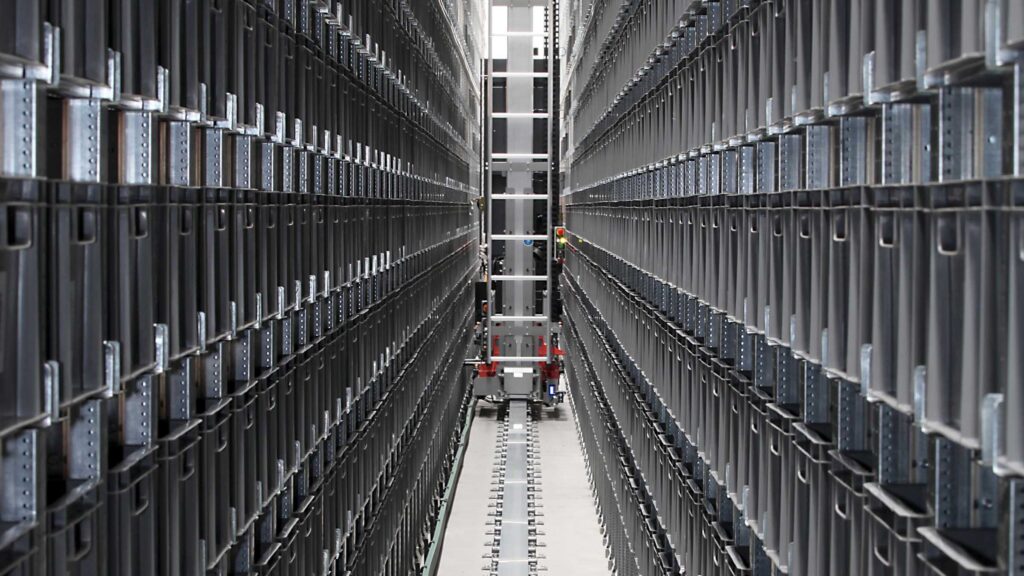
A Mini-Load AS/RS (Automated Storage and Retrieval System) is a warehouse automation system designed to automatically store and retrieve smaller items—typically cases, cartons, or individual boxes—rather than full pallets.
Here’s how it differs from Unit Load systems:
A Micro-Load AS/RS (Automated Storage and Retrieval System) is a warehouse automation system designed to store and retrieve very small items—typically individual pieces, components, or small parts rather than cases or cartons.
Here’s how it fits into the AS/RS spectrum:
In the AS/RS hierarchy, you have Unit Load (pallets) → Mini-Load (cases/cartons) → Micro-Load (individual small items), with each successive level handling smaller items at higher transaction rates.
A Carousel-Based AS/RS is a warehouse automation system that uses rotating carousels (either vertical or horizontal) to automatically store and retrieve items. Rather than using cranes or shuttles moving through racks, this system brings the storage to the operator.
The system consists of one or more carousels—rotating storage units that look like large Ferris wheels (vertical) or merry-go-rounds (horizontal). Items are stored in bins or slots around the carousel’s perimeter. When an item is needed, the control system signals the carousel to rotate until the desired bin reaches the picking station, where an operator retrieves it. The carousel then rotates to the next item needed.
Vertical carousels rotate like a Ferris wheel, stacking items high to maximize floor space. They’re ideal for facilities with limited floor area but adequate ceiling height. Horizontal carousels rotate like a turntable and are better for heavier items or when you need faster access to multiple items in sequence.
Carousel systems bring items to the worker rather than sending workers into tall racks, which is ergonomically safer and faster. They’re significantly less expensive than crane-based AS/RS systems. They require less infrastructure and are easier to install in existing spaces. They also improve picking accuracy and can handle high volumes efficiently.
Carousel systems are commonly used in pharmaceutical distribution, e-commerce fulfillment centers, spare parts warehouses, apparel distribution, and small parts manufacturing. They’re particularly popular for operations that need moderate automation without the capital investment of larger AS/RS systems.
Unlike AS/RS systems with multiple retrieval devices, carousels can typically serve one picking station at a time, so throughput per unit is lower. They’re best suited for moderate to high-volume operations with somewhat predictable picking patterns rather than extremely high-speed, multi-station environments.
A Vertical Lift Module (VLM) is a warehouse automation system that uses a vertical carousel mechanism with a robotic extractor arm to automatically store and retrieve items from compact, tower-like storage units.
A VLM consists of a tall, narrow cabinet (typically 30-40 feet high) filled with horizontal trays or shelves stacked vertically. A motorized extractor arm moves up and down along the front of the cabinet, automatically retrieving the requested tray and bringing it to an ergonomic picking station at waist height where an operator accesses the item. Once the operator is done, the arm returns the tray to its location and retrieves the next one.
VLMs are extremely space-efficient—they have a small footprint (often just a few feet wide) but store massive amounts of inventory vertically. The system is fully enclosed, which protects items from dust and damage. All picking happens at a comfortable ergonomic height for workers, reducing fatigue and repetitive strain injuries. The extractor arm is fast, typically delivering trays in seconds.
VLMs significantly reduce picking time compared to manual retrieval from shelves. They maximize storage density in a minimal floor space, making them ideal for facilities with high real estate costs. Labor productivity increases because workers spend less time traveling and searching. Inventory accuracy improves through system control. They’re also relatively modular and can be added incrementally as needs grow.
VLMs are widely used in e-commerce fulfillment, pharmaceutical distribution, spare parts warehouses, apparel and fashion distribution, and small parts manufacturing. They’re particularly popular in urban or space-constrained environments where floor space is premium.
Unlike carousels that rotate items to a station, VLMs extract individual trays. Unlike traditional AS/RS with cranes, VLMs are more compact, less expensive, and safer for workers. VLMs typically handle higher transaction rates than horizontal carousels but serve a single picking station per unit.
A Robotic-Based AS/RS is a warehouse automation system that uses mobile robots or robotic arms to automatically store and retrieve items from storage locations, offering flexibility and scalability that traditional fixed systems don’t provide.
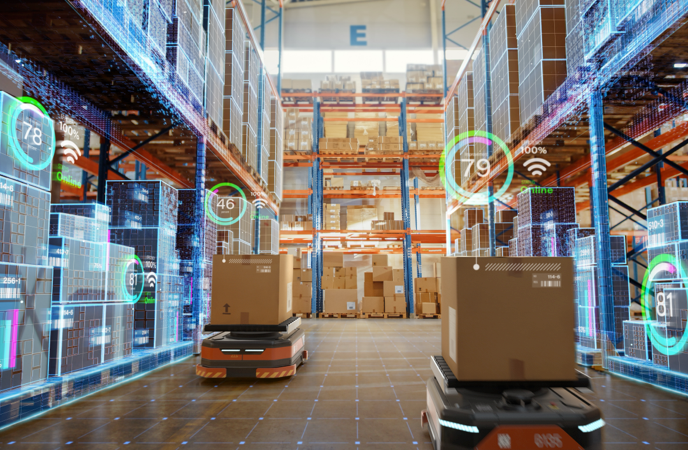
Mobile robot systems (often called “goods-to-person” systems) use autonomous mobile robots that navigate warehouse floors to retrieve storage pods or racks and bring them to picking stations. Rather than fixed aisles and cranes, the robots move dynamically throughout the warehouse. Robotic arm systems use articulated robotic arms, often mounted on mobile bases or fixed at picking stations, to grasp and manipulate items with precision. Some systems combine both approaches for maximum flexibility.
In a mobile robot system, the warehouse floor is equipped with positioning markers or sensors. When an order comes in, the system directs a robot to retrieve the appropriate storage pod containing the items and transport it to a picking or packing station. Multiple robots can operate simultaneously throughout the warehouse, creating a dynamic, efficient workflow. The system uses sophisticated software to optimize robot routing and prevent collisions.
Robotic systems are highly scalable—you can add or remove robots based on demand without major infrastructure changes. They’re flexible and adaptable to different warehouse layouts and can be reconfigured as operations change. They work alongside human workers safely with built-in collision avoidance. Many robotic systems are modular and can be deployed relatively quickly compared to building fixed rack systems. They also handle variable product sizes and shapes well since robots can adapt their approach.
Robotic-based systems are increasingly used in large e-commerce fulfillment centers, specialty retail distribution, pharmaceutical warehouses, and manufacturing environments. Companies like Amazon have popularized mobile robot systems at scale. They’re also being adopted in smaller operations as costs decrease.
Unlike fixed crane-based systems, robotic systems don’t require permanent aisle infrastructure. They’re more adaptable to changing needs and can handle variable inventory better. However, they may require more sophisticated software and control systems. Mobile robot systems generally have lower initial capital costs for smaller deployments but can become expensive at very large scale.
AI and machine learning are increasingly used to optimize robot movements and predict picking patterns. Collaborative robots (cobots) work more closely with humans in shared spaces. Advanced vision systems allow robots to identify and handle individual items rather than just moving standardized containers.
Automated Storage and Retrieval Systems (AS/RS) provide several key benefits for warehouses and manufacturing facilities:
AS/RS provides a foundation for more efficient, cost-effective, and safer warehouse operations, benefiting short-term productivity and long-term scalability.
Automated Storage and Retrieval Systems (AS/RS) use automated machines and computer-controlled technology to store and retrieve items within a designated storage area. Here’s a breakdown of how they work:
This process enhances speed, reduces errors, and improves overall productivity by automating repetitive and time-consuming storage tasks, making AS/RS an asset in modern warehouse operations.
Choosing the right Automated Storage and Retrieval System (AS/RS) requires assessing specific needs, operational demands, and long-term goals. Here’s how to make an informed selection:
Automated Storage and Retrieval Systems (AS/RS) costs vary widely, from $100,000 for basic setups to over $5 million for advanced, large-scale systems. Pricing depends on factors such as the system type (e.g., mini-load, unit load, or robotic), capacity, and complexity. Installation, software integration, and facility layout also impact the final cost.
While the initial investment may be high, AS/RS often yields significant long-term savings in labor, space optimization, and improved productivity, leading to a favorable return on investment for many operations.
The first automated storage and retrieval system (AS/RS) was developed in the 1950s by Dematic (formerly known as Mannesmann Demag) in Germany. Initially designed to automate heavy lifting and storage in industrial settings, AS/RS technology evolved over time, driven by various companies aiming to improve warehouse efficiency and inventory management.
The main functions of Automated Storage and Retrieval Systems (ASRS) are to store and retrieve inventory accurately and efficiently. Automated Guided Vehicles (AGV) transport materials within a facility, connecting different areas. Together, ASRS and AGV systems improve material flow, reduce manual labor, enhance accuracy, and streamline order fulfillment in warehousing and manufacturing environments.
Yes, Amazon uses Automated Storage and Retrieval Systems (ASRS), including robotic units like Kiva robots, which retrieve and transport items directly to workers at picking stations. These systems boost Amazon’s efficiency, speed up order fulfillment, and reduce labor demands in its fulfillment centers.
Alternatives to Automated Storage and Retrieval Systems (ASRS) include manual storage with forklifts, conveyor systems for item movement, and Automated Guided Vehicles (AGVs) for material transport. Other options include vertical lift modules (VLMs) and mobile shelving systems, which provide automation benefits without the full infrastructure investment of ASRS.

Comments are closed.

[…] by adopting advanced storage systems. Solutions like vertical lift modules, compact shelving, and automated storage/retrieval systems (AS/RS) enable goods to be stored in tighter configurations while remaining […]